
A brief breakdown of my day 1 experiences at the 39th London International Wine Fair.
- 08.30: The journey begins for the hour or so trip east to Excel London. Feeling primed by the 100 or so wines at the wine society tasting last night, bring it on LIWF.
- 09.25: Sardine crammed into the DLR amongst rather tanned looking new world international representatives.
- 09.45: First impressions; overwhelming! Looks like every wine producing continent, country and region is being showcased. A flick through the show catalogue confirms its no overstatement. Australia to Argentina, Bosnia to Bulgaria, Chile to Croatia the list goes on. Standing with an empty tasting glass prepared for battle!

- 10.00: First vino passes over my lips. Tasted through the Chardonnay’s of HESS from California grown grapes to Monterey, Nappa to estate grown Su`Skol Vineyard, the 07 getting a creditable mention. Nice, creamy and round with decent acidity – very drinkable for 10am.
- 10.30am: Tasted through Bouchard Pere & Fils 2007 white’s from Saint-Bris, Petit Chablis, Chablis, Montmains, Fourchaume, Pouilly-Fuisse, Meursault and so on………
- 12.00: Spent most of the morning wandering around like a kid in a candy store, getting my bearings, scheduling appointments and keeping an eye out for tasting candidates.
- 13.00: The Wine and Spirits Education Trust gave a level 4 diploma tutorial through blind quality assessment. Given 3 wines in this instance red, all of the same variety and from the same country. The object was to asses the quality through the WSET systematic approach to wine tasting assessing every nuance from the clarity, intensity and colour of the appearance, the condition, intensity, development and aroma characteristics of the nose, the sweetness, acidity, tannin structure, alcohol level, body, flavour intensity, flavour characteristics and length of the pallet and finally the quality, reasons for quality assessment, origins, variety, theme, price, age, readiness for drinking/potential aging of the wines conclusion. For reference the wines happened to be 3 Pinot Noirs all from Australia ranging from £12 to £20 per bottle; De Bortoli Yarra Valley Estate, Punt Road and Kooyong Estate. I really enjoyed this breakdown and while I may not be in a position to book myself onto the diploma, im certainly going to take the online distance learning WSET Advanced level 3 certification in my spare time for fun.

- 14.15: Journalist Tim Atkin MW gave a presentation through the hidden depths of Beaujolais with 6 wines from villages to Cru vineyards. Notable mentions from my tasting sheet were the third wine, Fleurie Les Garants Domaine de Vissoux Pierre-Marie Chermette 2006 showing typical Beaujolais fresh clean fruit, quite round on the pallet with a tasty fruity fresh finish. The second wine of note from the tasting was the sixth wine, Brouilly Cuvee des Fous Jen-Claude Lapalu 2003 showing much more complexity than the other Beaujolais showcased, grown on 100 year old vines, restricted yields and no carbonic maceration this wine was served from a decanter and had the fresh fruit but with quite a firm tannin structure, a little oak from the 5 year old barrels but nothing over powering. Something a little more complex than a fruity Beaujolais. Tim ended the presentation publicly stating that as he gets older he enjoys Beaujolais more and more, not just because hes getting paid for the presentation but that he genuinely enjoys it and other should too. Good show and how god damm busy was the Beaujolais stand…………..VERY.
- 14.45: Riedel had a great stand at the fair showcasing all of the fine glassware they have to offer including the rather ostentatious new snake decanters that need to be cleaned in the bath, those things were huge. Interestingly they had a practical tasting where you would taste a wine, in my case 2 (Chardonnay and Sauvignon blanc), with its respective Riedel glass and an alternative. Now this wasn’t a total sales pitch, more of an expose. They weren’t comparing a Riedel glass with a tea cup, you could smell and taste each wine through a Riedel Chardonnay glass and a Riedel Sauvignon glass. I had my doubts but amazingly you really do benefit from variety specific glassware based on these two wines. The practical explanation is that when you have a bowl shaped glass, say for chardonnay, you don’t need to tilt the glass so far back and thus also tilting your head back further to deliver the wine to your mouth. In reducing these you naturally alter the shape of your tongue which does change the initial attack on the pallet and certainly enhances the wine experience. I do have Riedel glassware or rather I have a couple which I drink everything out of but I am now a believer of variety specific glassware.

- 15.00: Back to the WSET tasting stand where we conducted the same systematic tasting described above in the previous WSET experience but this time with sparkling wine. Additional features to discuss were the Mousse or bubble size on the appearance, a little hard if not impossible through the standard ISO tasting glasses we had and an additional aroma characteristic of Autolysis. In other words, if the aroma carries characteristics of yeast, biscuit, bread, toast or the lees then its autolytic. The Sparklers ranged from £8 to £27 and were from Spain, France and Australia – Codorniu Casico Brut, G.H Mumm Cordon Rouge NV and Jacobs Creek Blanc de Blancs NV respectively.

- 16.00: Next was a tasting through 8 wines from Castilla-La Mancha again presented by Tim Atkin MW who I saw earlier present the hidden depths of Beaujolais. The tasting was good but nothing really grabbed me by the horns. Tims a great guy though and an entertaining wine front man.
- 17.00: Third tasting of the day from WSET, same protocol as before this time with sweet wines which turned out to be an Echeverria Late Harvest Sauvignon Blanc from Chilie, Castelnau de Suduiraut from Sauternes and a positively dark golden Pelee Island Icewine from Canada at £11, £14 and £34 per bottle respectively.
- 17.45 +: A quick wip around the show to dabble in the sweeties from across the globe called an end on the day and the journey home begins. A crammed DLR again followed by a sleepy Victoria line to waterloo to connect. Seriously tired feet!
Quite a day! Entertaining, exhausting, educational and informative. Some exciting appointments booked for Wednesday.

 bible this place really shouldn’t need an introduction. Im planning on writing a separate post about the findings of this fascinating vertical tasting but in short we covered vintages from 2003 to 1959 of the reds including some vintages of white. All I can say is wow. Wow. These wines are fascinatingly interesting. If you haven’t tried one go and buy the best one you can afford and give it a go with an open mind to what you discover. A disclaimer is that they are different to wines as you know them but really wonderful
  examples of something outside of the “old/new world” definition. Really exciting wines. Serge Hochar is quite a character and gave a great entertaining presentation and guide through the wines with some technical tasting notes given by John Avery MW. I look forward to writing my discovers from this masterclass, again fascinating…..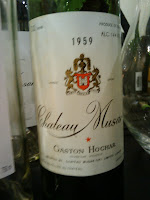
 businesses particularly in the wine world. Ryan briefly touched on some of the free tools available and what they bring to the table outlining the importance that today, these tools are free followed by a question and answer session and some useful link sharing. Don’t re invent the wheel and write a new blogging or social networking tool, embrace what is already out there!


 Posts
Posts

